
Negotiating Government Podcast
Negotient is the expert adviser in managing negotiations between the public and private sectors; we advise clients in both sectors how to get the best results from their negotiations. This podcast explores the strategies and behind-the-scenes mechanics that shape successful negotiations, and the factors that drive the interests of both sides. Our aim is to help those involved in public sector negotiations understand the challenges they face — and how to overcome them to deliver better results for the public.
Subscribe:
Latest Episode
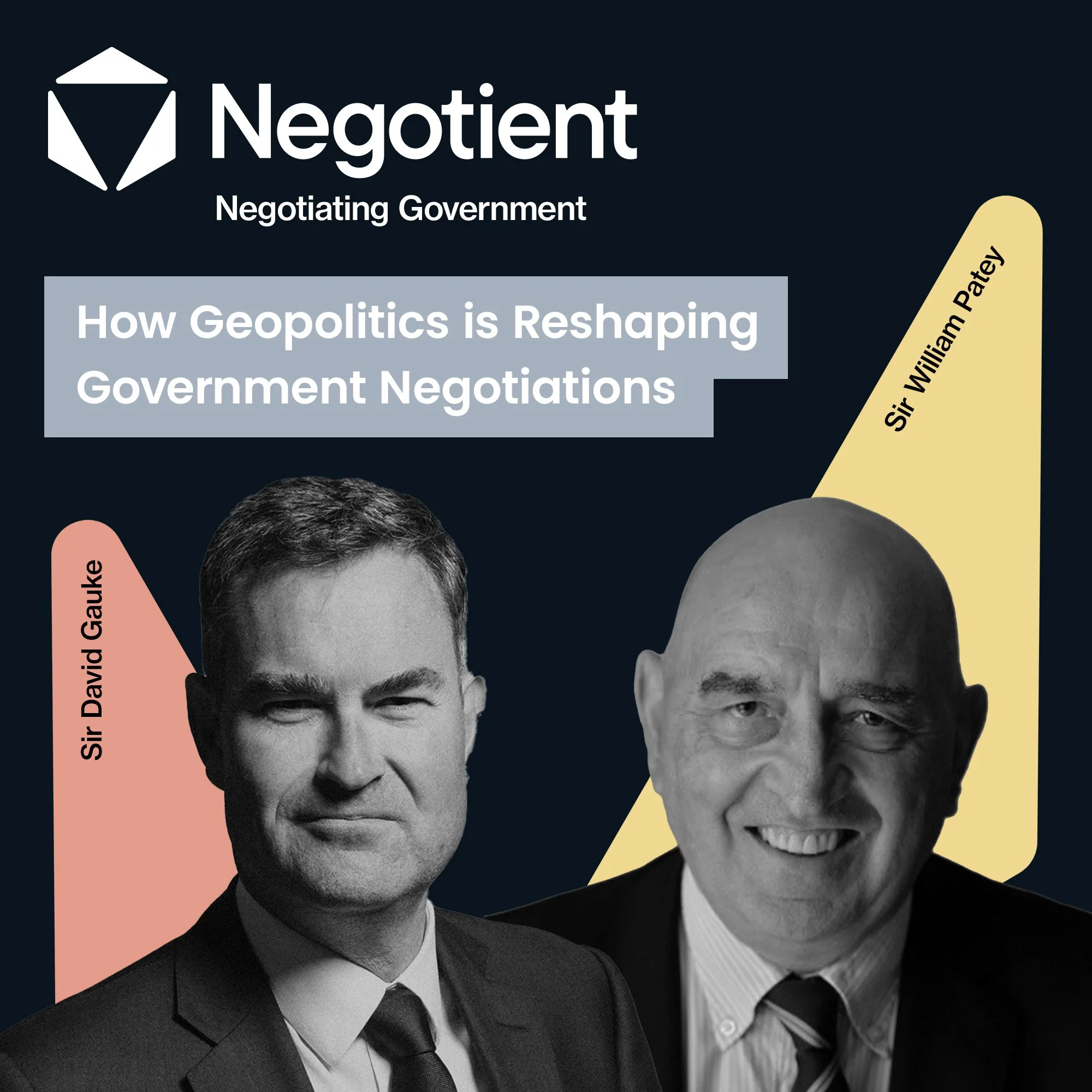
How Geopolitics is Reshaping Government Negotiations
Geopolitics is becoming an increasingly important factor in government negotiations.
The relatively predictable global environment of recent decades is giving way to greater uncertainty. Trade relationships are changing, protectionism is increasing, supply chains are vulnerable and governments are reconsidering their reliance on overseas suppliers and traditional allies.
In this episode of Negotiating Government, David Gauke is joined by Sir William Patey, former British Ambassador to Afghanistan, Saudi Arabia, Iraq and Sudan, to explore what this changing geopolitical landscape means for businesses working with government.
They look at the growing emphasis on Buy British, economic security and domestic industrial capability, and why businesses can no longer assume that winning a government contract is simply about providing the best product at the lowest price.
David and William discuss:
How the shift from a relatively stable global order is changing UK government decision-making
Why Buy British and economic security are becoming more important in public procurement
How security of supply can become a competitive advantage in government negotiations
What changing relationships with the US and Europe mean for defence procurement
Why government may increasingly support domestic industrial and technological capability
How geopolitical choke points, critical minerals and semiconductor supply create new risks
The growing importance of energy security to UK economic and industrial policy
How government will balance net zero, energy costs and the demands of AI and new technology
Why geopolitical disruption can suddenly affect industries that previously appeared relatively insulated
What businesses should do differently when preparing to negotiate with government
The central lesson is that businesses need to understand the pressures facing government before entering a negotiation.
Competitive pricing and a strong product remain essential, but increasingly they are only the starting point. Businesses that can demonstrate how their proposition supports resilience, security of supply, UK capability or another strategic government priority may be able to create negotiating advantages that go well beyond price.
Note: this podcast was recorded before the recent change of Prime Minister.
Featured on this episode
David Gauke
Chair

Sir William Patey
Senior Advisor

Previous Episodes

Winning Government Defence Contracts: What the Defence Investment Plan Really Means
In this episode of Negotiating Government, David Gauke is joined by former Aviation, Maritime & Security Minister Robert Courts to explore what the plan really means for defence suppliers, technology companies and businesses looking to work with government.
Rather than treating the document as a shopping list of future contracts, they examine the strategic thinking behind government investment decisions and explain why political priorities, Treasury approval and strategic relevance increasingly determine which suppliers succeed.
They discuss:
Why the Defence Investment Plan is a guide to government priorities—not guaranteed procurement
How defence companies can become strategically relevant
The growing importance of sovereign capability and UK industrial resilience
Why Treasury thinking matters just as much as Ministry of Defence priorities
Lessons from defence procurement successes and failures
How AI, autonomy and rapid technological change are reshaping procurement
What CEOs should do now to improve their chances of winning government contracts
Whether you work in defence, aerospace, technology or government affairs, this episode provides practical insight into how modern government procurement decisions are really made—and how to position your organisation for success.
Featured on this episode
David Gauke
Chair
Robert Courts
Director
Ascalane Partners


How Governments Co-ordinate Investor-State Negotiations and Disputes
What makes the difference between a successful investor-state negotiation and an expensive international dispute?
In this episode of Negotiating Government, Negotient founding partner Iain Steel is joined by Katerina Drisi of ProSovereign Global to explore the often-overlooked challenge at the heart of major government investment deals: internal coordination.
Investor-state negotiations involve far more than a government department and a multinational investor. Whether the project concerns mining, energy, natural resources, infrastructure or a public-private partnership, governments must align the interests of finance, legal, labour, environment, investment and sector ministries — while retaining political support at the highest level.
Iain and Katerina discuss how governments can build effective negotiating teams, manage competing priorities across ministries and avoid the inconsistent decisions that can trigger investor claims for unfair or discriminatory treatment. They also examine the practical realities of investor-state arbitration, from gathering evidence and managing legal counsel to establishing clear processes when a claim is received.
The conversation explores why negotiation success depends on more than getting a contract signed. Strong implementation, structured handovers, realistic contractual obligations and clear accountability are all essential to preventing disputes later.
Drawing on experience advising governments across international investment projects, Iain and Katerina share practical lessons on:
Building cross-government teams for investor-state negotiations
Managing negotiation strategy, political escalation and back channels
Preventing disputes through consistent administrative processes
Improving handover from deal negotiation to implementation
Designing contracts that can be delivered within real institutional capacity
Strengthening government readiness for international arbitration
For government leaders, public-sector negotiators, investors, legal advisers and anyone involved in international investment, this episode offers a practical guide to negotiating better outcomes — and reducing the risk of disputes before they begin.
Featured on this episode
Iain Steel
Founding Director

Katerina Drisi
CEO/Founder
ProSovereign Global


Devolution is a Negotiation: Delivering Successful Regional Government in the North East
The English Devolution Act 2026 has just passed — but how do combined authorities actually negotiate the deals, powers and investment that make devolution work in practice? Phil Witcherley, Director of Economic Growth and Innovation at the North East Combined Authority, joins James Dowling to reveal the strategy behind building regional coalitions, securing integrated settlements and attracting private investment. An essential listen for businesses, investors and public sector leaders navigating England's new devolution landscape.
What You’ll Learn:
Why devolution should be treated as a negotiation — not a grant application — and how that mindset changes outcomes
How the North East Combined Authority built a regional coalition of businesses, local authorities and private sector partners to strengthen its position with central government
What an integrated settlement actually means in practice, and why it represents a fundamentally different relationship with central Government compared to traditional grant funding
How Phil's background as a Treasury official gives the North East a strategic advantage in understanding what central government actually needs to hear
The growing role of combined authorities in attracting foreign direct investment — and why businesses increasingly want to deal with regional government, not just Whitehall
How private sector partners can use the devolution agenda as a lever for joint investment in regional infrastructure
Featured on this episode
James Dowling
Managing Partner

Phil Witcherley
Director of Economic Growth and Innovation, The North East Combined Authority

Why You’re Always Negotiating with the Treasury
If you're negotiating with government, you're not just dealing with a department — you're negotiating with the Treasury.
In this episode of the Negotiating Government Podcast, David Gauke (former Chief Secretary to the Treasury) and John Hall (former HM Treasury official) explain how the Treasury shapes every major government decision — even when it’s not in the room.
Drawing on real experience inside Whitehall, they break down how public spending decisions are made, why negotiations with government can feel slow and opaque, and what private sector organisations must do differently to succeed.
You’ll learn how HM Treasury acts as the ultimate gatekeeper of policy, funding, and approval — and why understanding its mindset is critical if you want to influence outcomes.
What You’ll Learn:
Why you are always negotiating with HM Treasury
How government spending decisions really get made
The three tests every proposal must pass: affordability, need, and value for money
Why negotiations with government feel slow, unpredictable, and unclear
How different Whitehall departments operate — and why culture matters
The “hidden stakeholder” problem in government decision-making
Practical strategies to influence the Treasury indirectly
Why economic pressure is making government negotiations more difficult
Key Insight:
The person you’re negotiating with isn’t the decision-maker — they’re your route into the decision-making system. Your job is to help them build a case the Treasury will approve.
Who This Episode Is For:
CEOs and senior leaders working with government
Policy, public affairs, and regulatory professionals
Private sector organisations bidding for government work
Trade bodies and industry groups
Anyone looking to understand how UK government decisions are really made
Featured on this episode
David Gauke
Chair
John Hall
Associate


The SAG-AFTRA Strike Explained: AI, Streaming Residuals and Labour Negotiation Strategy
The SAG-AFTRA Strike Explained: AI, Streaming Residuals and Why Strikes Escalate
Why did the 2023 SAG-AFTRA strike last so long — and why do rational negotiators sometimes accept mutually damaging outcomes?
In this episode of Negotiating Government, Miranda Worthington (former Director of Industrial Relations at the UK Department of Health & Social Care) and Josh Flax (former Deputy Director of the US Federal Mediation Service) analyse the SAG-AFTRA strike and what it reveals about modern labour negotiations.
They explore:
The role of AI and digital likeness rights in actors’ contracts
How streaming residuals changed the economics of film and television
Why high-profile strikes escalate despite clear financial losses
How cognitive biases such as the sunk cost fallacy and stop-loss bias distort decision-making
The power of “moves away from the table” and shaping public opinion
How celebrity visibility created leverage in a public negotiation
Using Hollywood as a case study, this episode explains the strategic dynamics behind major industrial disputes — and what negotiators in any sector can learn about leverage, escalation and reputational pressure.
If you want to understand why strikes happen, why they last, and how negotiation psychology shapes outcomes, this episode offers a practical and analytical perspective.
Featured on this episode
Miranda Worthington
Director

Joshua Flax
Founding Partner & USA Practice Lead

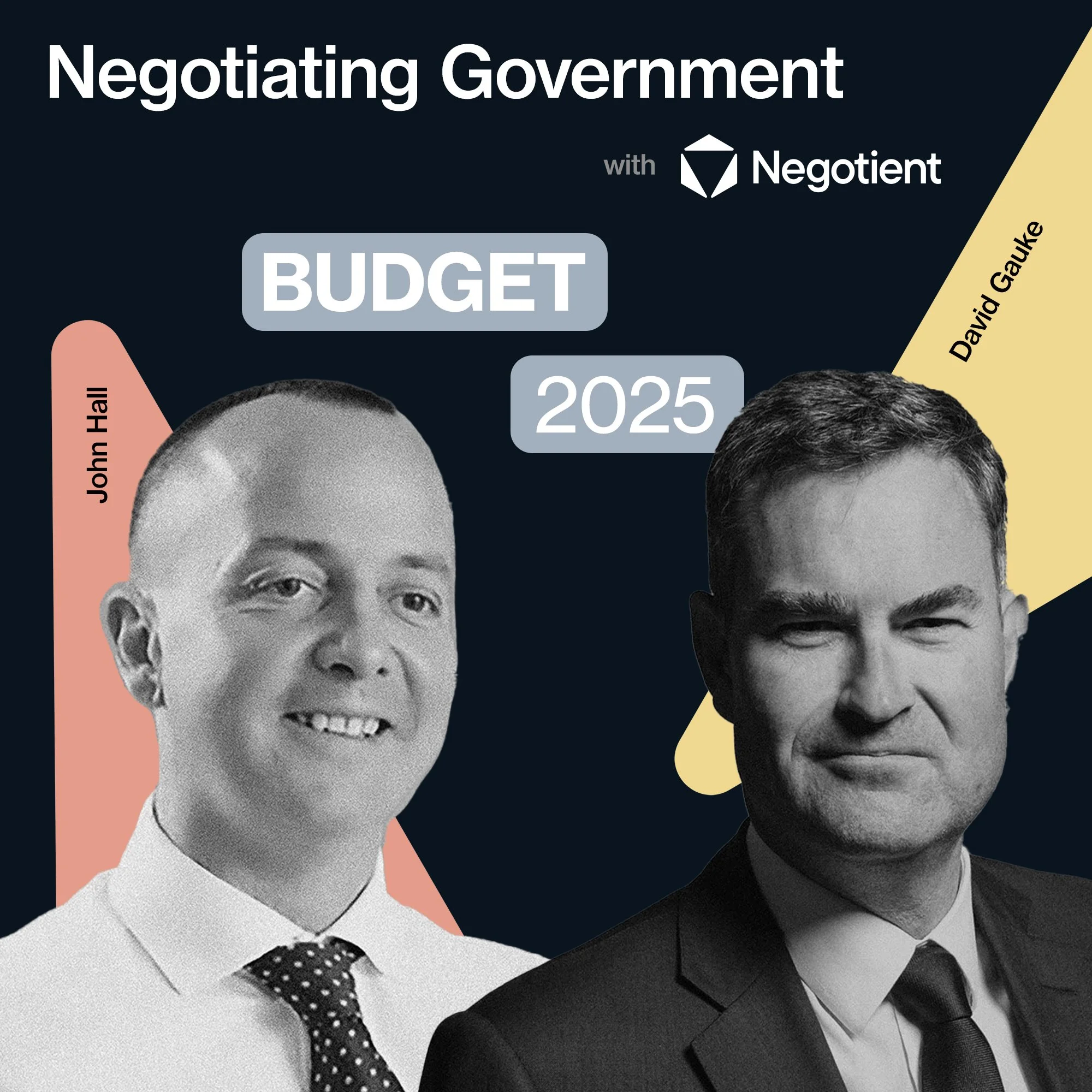
How the UK Budget Affects Business: Pharma, Energy, Oil and Regional Growth Strategy
What does the UK Budget 2025 really mean for businesses negotiating with government?
In this episode of Negotiating Government, former Treasury official John Hall and former Chief Secretary to the Treasury David Gauke analyse the November 2025 UK Budget from an insider’s perspective — focusing on what matters most for the private sector.
They examine:
Why the Budget prioritised fiscal repair over economic growth
What the Fingleton Review reveals about regulatory reform and infrastructure delivery
Whether the government’s fiscal headroom strategy is sustainable
The pressure points facing sectors such as NHS pharmaceuticals and energy
Whether “temporary” taxes like the Energy Profits Levy ever truly remain temporary
The strategic importance of the new Local Growth Fund and mayoral investment powers
Despite significant tax measures, the Budget left many business leaders questioning the UK’s growth strategy. This episode explores how fiscal policy, regulatory reform and political constraints shape the environment for companies engaging with government.
If you operate in a regulated sector or face sector-specific tax risk, this episode explains how to interpret Budget signals — and how to respond strategically.
Featured on this episode
David Gauke
Chair
John Hall
Associate

How the UK Budget Process Works: Inside HM Treasury and the Role of the OBR
How does HM Treasury build a Budget — and who really shapes the final decisions?
In this episode of Negotiating Government, former Chief Secretary to the Treasury David Gauke and former senior Treasury official John Hall explain how the UK Budget process actually works, from early internal negotiations to last-minute fiscal decisions.
They explore:
How HM Treasury works with the Office for Budget Responsibility (OBR)
The strategic choices facing the Chancellor ahead of a Budget
How fiscal rules and “headroom” influence tax and spending decisions
Why some measures appear late in the process
When and how businesses can influence Treasury thinking
Drawing on first-hand experience inside government, this episode reveals the months-long negotiation process that sits behind every UK Budget — and what it means for sectors likely to be affected by tax or spending changes.
If you want to understand how to negotiate with the Treasury, anticipate fiscal shifts, or engage government effectively during a Budget cycle, this episode provides an insider’s guide to how decisions are really made.
Featured on this episode
David Gauke
Chair
John Hall
Associate
What Is a Strike? UK vs US Industrial Action, Rolling Strikes and Lockouts Explained
What exactly is a strike — and how do strike laws differ between the UK and the United States?
In this episode of Negotiating Government, Miranda Worthington (former Director of Industrial Relations at the UK Department of Health and Social Care) and Josh Flax (former US federal mediator) explain how strikes and industrial action really work.
They explore:
What legally defines a strike
The difference between rolling strikes and indefinite strikes
Strike vs lockout: how employers respond in the US
Why public sector strikes are more common in the UK
How collective bargaining agreements shape industrial action
The wider economic and reputational impact of strikes
Drawing on experience from NHS strikes and US federal mediation, this episode compares UK and US labour systems and explains why work stoppages unfold so differently on each side of the Atlantic.
If you want a clear explanation of how industrial action works — and what it means for employers, unions and government — this episode provides practical insight grounded in real-world negotiation experience.
Featured on this episode
Miranda Worthington
Director
Joshua Flax
Founding Partner & USA Practice Lead
Negotiating with Government from the Inside: Why Public Sector Negotiations Are Different
How is negotiating with government different from negotiating in the private sector?
In this episode of Negotiating Government, former Cabinet Minister David Gauke and former Director of Industrial Relations at the Department of Health and Social Care, Miranda Worthington, explain why public-private negotiations operate under entirely different rules.
Drawing on senior experience inside Whitehall, they explore:
Why government is a uniquely complex counterparty
How internal silos and competing departmental priorities affect negotiations
The impact of public scrutiny, media pressure and political accountability
Why precedent and fiscal constraints shape government decision-making
The cultural differences between ministers and civil servants
How to anticipate political shifts that can suddenly accelerate or stall a deal
Government negotiations are rarely just commercial discussions. They are shaped by political risk, public accountability and institutional process in ways that private-sector negotiators often underestimate.
If you want to understand how to negotiate with government more effectively — and why deals move slowly, change direction or become high-profile — this episode provides an insider perspective on how Whitehall really works.
Featured on this episode
David Gauke
Chair
Miranda Worthington
Director
US-UK Trade Deal Explained: How Government Trade Negotiations Really Work
What really happens inside a high-stakes government trade negotiation?
In this episode of Negotiating Government, Chris Brown and Josh Flax analyse the recent US-UK trade deal and explore what it reveals about power, leverage and strategy in government-to-government negotiations.
Using the Trump–Starmer dynamic as a case study, they unpack:
How negotiators shift baselines and frame concessions as victories
The role of anchoring, timing and narrative control
Why understanding your counterpart’s no-deal scenario is critical
How political incentives shape public trade negotiations
What business leaders can learn from high-profile diplomatic deals
This episode goes beyond headlines to examine how trade agreements are structured, positioned and sold — and what that means for organisations negotiating with government.
Whether you are directly involved in public sector negotiations or interested in how political leaders manage high-pressure deals, this episode offers practical insight into real-world negotiation strategy.
Featured on this episode
Chris Brown
Founding Partner

Joshua Flax
Founding Partner & USA Practice Lead
Spending Review 2025 Explained: Capital Investment, Growth Strategy and Fiscal Credibility
How is the UK government balancing capital investment, economic growth and fiscal discipline in the 2025 Spending Review?
In this episode of Negotiating Government, former Chief Secretary to the Treasury David Gauke and former Senior Treasury spending official John Hall break down the strategic decisions behind the Spending Review 2025 — and what they signal for businesses, sectors and organisations negotiating with government.
They explore:
Why capital spending is rising in defence and green energy
How fiscal rules shape public spending decisions
Whether the government is truly benefiting from its revised fiscal framework
How changes to the Treasury “Green Book” could alter investment priorities
What record post-war tax levels mean for future policy choices
For anyone engaging with HM Treasury or operating in a sector reliant on public funding, understanding how capital allocation decisions are made is critical. This episode explains the political, economic and institutional forces shaping the Spending Review — and what they mean for the UK’s growth strategy.
If you want to understand how government investment decisions are negotiated and prioritised, this episode provides the inside perspective.
Featured on this episode
John Hall
Associate
David Gauke
Chair
How the UK Spending Review Works: What the Spring Statement Reveals About HM Treasury Strategy
What does the Spring Statement tell us about how HM Treasury will approach the UK Spending Review?
In this episode of Negotiating Government, David Gauke (former HM Treasury and Cabinet Minister) and John Hall (former HM Treasury Health Spending Team Leader and Department of Health Strategy Director) explain how the UK Spending Review process really works — and what it means for organisations negotiating with government.
Drawing on their experience inside Whitehall, they explore:
How HM Treasury sets spending envelopes
The role of fiscal rules in shaping public sector negotiations
The tension between capital investment and day-to-day spending
Why innovation and efficiency matter in public services
How international economic pressures, including US policy shifts, influence UK fiscal strategy
This episode provides practical insight into how government spending decisions are made — and what businesses, sectors and public bodies should understand when engaging with HM Treasury during a Spending Review.
If you want to understand how to negotiate with government during periods of fiscal constraint, this is the place to start.
Featured on this episode
John Hall
Associate
David Gauke
Chair